

Steel Siding, Aluminum Siding, and Vinyl Siding come in several configurations, but they all share one major design flaw: the use of water-collecting 'J' Channels. Decades ago, metal exterior cladding brought the 'J' Channel to the forefront. While thin and low profile, the inherent leak risks were immediately obvious to tradesmen. Today, 'J' channels are even improperly used on Fiber Cement Siding!
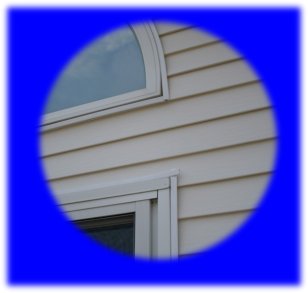
The use of 'J' Channels was originally designed for interior applications like drywall and ceiling terminations to cap edges cleanly. Applying this methodology to exterior building envelopes has proven disastrous.
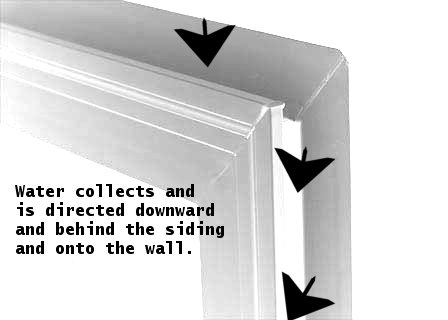
Water collects in the channel around round windows and wide patio doors, directing rainfall—along with dirt and debris—directly behind the siding system.
The siding industry has historically prioritized aesthetics over long-term building performance. Leaks behind siding are rarely realized right away; years after installation, trapped moisture leads to mold, severe insect infiltration, structural rot, and foul wall odors.
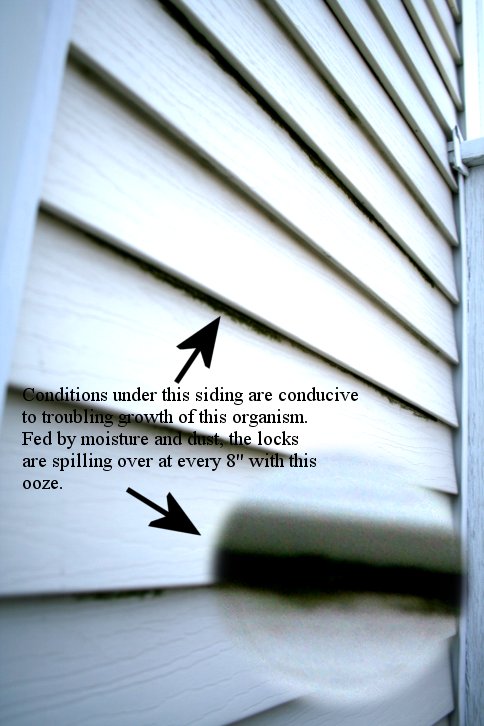
'J' Channels allow water and dust to enter behind the siding. Organic dust combined with wet wood substrate creates a prime breeding ground for harmful fungal spores and algae.
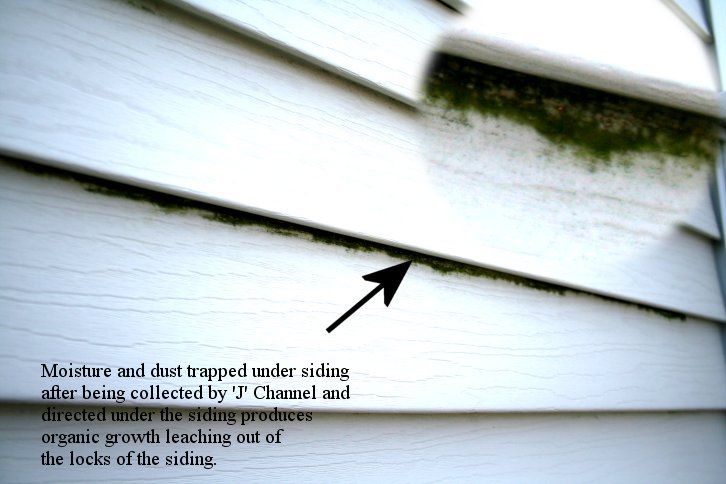
MOLD SPORES


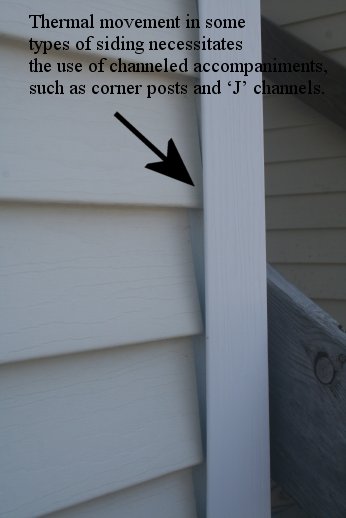
To accommodate thermal expansion and contraction, modern siding systems require larger gaps and wider 1-inch 'J' Channels. Larger channels collect even more water during rainstorms.
When wind-driven rain flows down vertical walls, window and door heads act as dams. The 'J' channels collect this massive water volume like gutters and dump it directly into the wall cavity.
Some in the industry claim an underlayment housewrap solves the problem. However, the Vinyl Siding Institute explicitly states in their Weather Barrier Statement that vinyl siding is merely a "Supplemental Rain Screen" and relies entirely on behind-the-scenes weather barriers to keep water out.
Without proper flashing, trapped water eventually rots the home's framing, forcing homeowners to strip off the siding entirely to repair hidden structural decay.
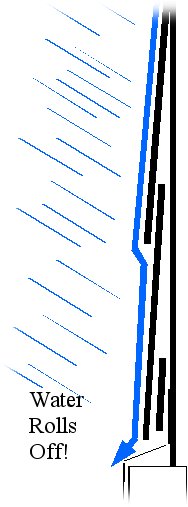
A fundamental rule of building science is never to "buck water." Materials should always lap over one another naturally so gravity drains water away from the wall.
New Window Designs with Integrated Channels
Below is an example of a modern window with built-in channels designed for fast, low-cost installation:
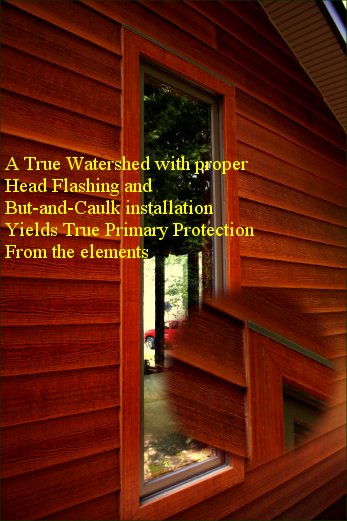
The True Watershed Solution: The photo shows a proper window trim installation using traditional, time-tested trade principles. No 'J' Channel is used. Instead, a true watershed detail naturally sheds rainwater down and away from the building envelope.
Read more about Mold behind Siding caused by interior moisture, housewrap traps, and improper seals.